
david cordani and john paulson built his reputation inside one of America’s largest healthcare companies. John Paulson became internationally recognized through an investment strategy that profited from the collapse of the American housing market. Their careers offer two distinct accounts of business influence: one rooted in managing an operating company, the other in identifying opportunities in financial markets.
A biography of david cordani and john paulson therefore begins with their separate identities. Cordani is the longtime Cigna leader who became executive chair in July 2026. Paulson founded Paulson & Co. in 1994 and became famous for his successful position against subprime mortgage investments in 2007.
david cordani and john paulson: Verified Information Table
The following information reflects publicly documented records available as of October 19, 2026. Cordani’s precise birthday is omitted because the authoritative sources reviewed do not establish it.
| Detail | David Cordani | John Paulson |
|---|---|---|
| Full name | David M. Cordani | John Alfred Paulson |
| Date of birth | Exact date not reliably confirmed in the sources reviewed | December 14, 1955 |
| Age | 60, according to Cigna’s current board biography | 70 as of October 19, 2026 |
| Birthplace | Connecticut, United States; confirmed at state level in his own account | Queens, New York, United States |
| Nationality | American | American |
| Profession | Healthcare executive and author | Investor and investment firm founder |
| Education | BBA, Texas A&M University; MBA, University of Hartford | BS in finance, New York University, 1978; MBA, Harvard Business School, 1980 |
| Documented career span | Cigna employment since 1991, preceded by work at Coopers & Lybrand | Professional career documented from 1980 |
| Known for | Leading Cigna as CEO from 2009 to July 2026 | Founding Paulson & Co. and his 2007 subprime mortgage trade |
| Major philanthropic interests | Community health and athletes with disabilities | Higher education and Central Park |
| Notable published work | Co-author of The Courage to Go Forward | His investment career is profiled in financial journalism and books |
Cigna’s board records, Cordani’s university interview, NYU’s alumni biography, and CNN’s biographical timeline support the principal details above.
David Cordani’s Early Life and Education
Cordani has described growing up in Connecticut in a household shared with his parents, grandparents, and two brothers. In a 2026 Texas A&M interview, he recalled a close Italian community and an upbringing shaped by hard work, service, and treating other people fairly.
His family moved to the Houston area in 1981 after his father left police work to enter the dry-cleaning business with a cousin. Cordani described the move as a major adjustment: he went from a familiar neighborhood and small school environment to a large Texas high school. He attended Klein High School and gradually found his place through friendships and shared activities.
Texas A&M later became an important part of his development. His older brother attended the university, giving Cordani opportunities to visit before enrolling himself. A university profile records that he studied finance and participated in competitive investment exercises that required research, teamwork, and presenting ideas.
He earned a Bachelor of Business Administration from Texas A&M and subsequently an MBA from the University of Hartford. These qualifications provided a foundation for a career combining finance, organizational management, and healthcare operations.
David Cordani’s Rise Through Cigna
From Finance to Executive Leadership
Cordani worked at Coopers & Lybrand before joining Cigna in 1991. His subsequent positions included corporate controller, leadership of Cigna Healthcare’s southeast region, and senior financial responsibilities within the healthcare business.
His progression was gradual. He became president of Cigna Healthcare in 2005, then president and chief operating officer of Cigna in 2008. Company filings place the start of his chief executive tenure in December 2009.
That sequence matters when comparing david cordani and john paulson. Cordani’s authority developed through increasingly broad responsibilities inside an established organization. His experience crossed finance, customer segments, marketing, and operations before he reached the top job.
Express Scripts and a Broader Healthcare Business
One of the defining events of Cordani’s leadership was Cigna’s combination with Express Scripts, completed on December 20, 2018. The transaction brought a major pharmacy-benefit management business together with Cigna’s existing healthcare operations.
Cigna presented the combination as a way to connect medical and pharmacy services more closely. Its stated objectives included improving affordability, expanding choice, and supporting more coordinated care. These were corporate goals rather than proof that every promised benefit had already been achieved.
The closing also accompanied an announced additional $200 million investment in charitable and community initiatives. Cigna introduced Healthier Kids for Our Future, including a five-year, $25 million commitment addressing children’s health and well-being.
The transaction helps explain why Cordani’s career reaches beyond the conventional image of an insurance executive. His tenure included a substantial expansion into services connected with prescription medicines and healthcare delivery.
Becoming Executive Chair in 2026
Cordani became board chair in January 2022. In March 2026, Cigna announced that Brian Evanko would succeed him as chief executive on July 1, with Cordani moving to executive chair.
The company’s current board biography confirms that transition. Accordingly, describing him as Cigna’s current CEO would be outdated as of October 2026. His executive-chair role followed a chief executive tenure spanning more than sixteen years and employment with the company dating to 1991.
John Paulson’s Background and Education
John Alfred Paulson was born on December 14, 1955, in Queens, New York. He is 70 as of October 19, 2026, and turns 71 in December. CNN identifies his parents as Alfred Paulson and Jacqueline Boklan Paulson.
His early business experience was unusually practical. Harvard Business School’s alumni profile describes a young entrepreneur who moved to Ecuador after initially studying philosophy. There, he became involved in manufacturing and trading goods, including clothing and decorative products.
Those ventures also revealed the limits of learning entirely through experience. Paulson returned to university to develop a stronger understanding of business. He graduated from NYU in 1978 with a finance degree, summa cum laude, and completed his Harvard MBA in 1980 as a Baker Scholar.
Education is a meaningful connection in the story of david cordani and john paulson: both earned business degrees before establishing the careers for which they became widely known. Paulson’s route, however, included entrepreneurial work before his formal financial training was complete.
John Paulson’s Investment Career
Building Experience Before Founding His Firm
Paulson began his post-MBA career at Boston Consulting Group in 1980. He subsequently worked at Odyssey Partners, Bear Stearns, and Gruss Partners.
These appointments exposed him to investment analysis, mergers and acquisitions, and strategies tied to corporate events. At Gruss, his work included risk arbitrage and bankruptcy investing.
He established Paulson & Co. in 1994, more than a decade before the housing-market trade that would make him famous. The chronology is significant: his breakthrough followed years of professional experience, rather than an immediate success at a newly founded firm.
The Housing-Market Trade
Paulson’s defining investment success came in 2007, when positions against subprime mortgage investments generated extraordinary profits. His strategy depended on the view that risks in the American housing and mortgage markets had been underestimated.
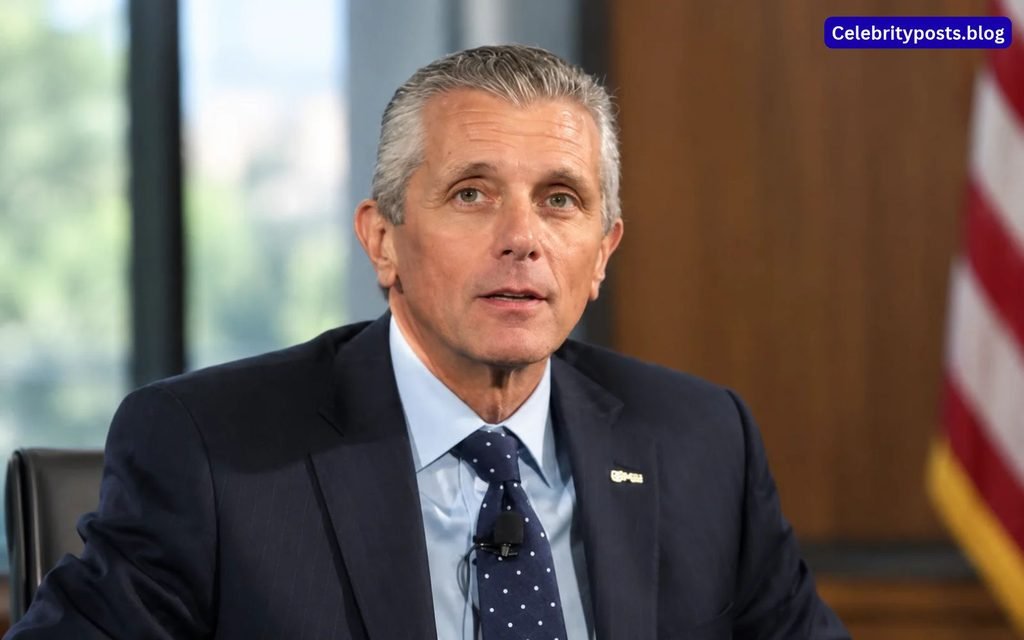
A published account from Wiley describes his use of credit default swaps linked to mortgage-backed securities. These instruments allowed him to take positions that benefited as the underlying credit deteriorated. Wiley reports approximately $15 billion in gains for Paulson and his investors at the end of 2007.
That figure describes investment gains across the strategy, not his personal net worth. Keeping those categories separate is essential to understanding the achievement accurately.
The episode made Paulson a prominent figure in financial history. It also illustrates the clearest professional distinction between david cordani and john paulson: Paulson became famous through a consequential market judgment, while Cordani’s reputation developed through sustained corporate leadership. Source
Later Challenges and the Family Office
Paulson’s later investment record was more mixed. Reuters reported that losses involving investments such as Sino-Forest and Valeant contributed to client departures, while the firm’s assets declined from earlier levels.
In 2020, he announced that Paulson & Co. would become a private investment office and return outside investors’ capital. The change shifted the firm away from managing money for external clients.
It did not mean Paulson was abandoning investing. His letter to investors, reviewed by Reuters, said he intended to remain active in markets. A responsible biography includes this later chapter alongside the celebrated housing trade because both belong to the record of his career.
Philanthropy and Life Beyond Business
Cordani’s Athletics and Community Work
Cordani’s public life includes sustained involvement in endurance sports and support for people with disabilities. Texas A&M’s profile documents his work with Achilles International athletes and notes that he marked thirty years of participating in triathlons in 2021.
His involvement includes helping wounded veterans pursue demanding athletic goals. This work connects his interest in physical fitness with practical support for other people.
He also co-authored The Courage to Go Forward: The Power of Micro Communities with Achilles founder Dick Traum. Published in 2018, the book explores how small, supportive groups help individuals pursue goals and overcome difficulties. It draws on the relationship between Cigna and Achilles International.
Cigna’s board biography additionally identifies his involvement with the David and Sherry Cordani Family Foundation, established to support community health and well-being. These activities provide a documented view of his interests beyond executive management.
Paulson’s Support for Education and Public Space
Philanthropy is another substantial theme in a profile of david cordani and john paulson. Paulson’s best-documented gifts include major support for Harvard and New York’s Central Park.
In 2015, Harvard announced his $400 million gift to its School of Engineering and Applied Sciences. The university described it as the largest gift in its history at that time. The school was renamed the Harvard John A. Paulson School of Engineering and Applied Sciences.
The gift supported research, teaching, financial aid, and faculty development. Although Paulson earned his Harvard degree in business, his donation supported engineering and applied sciences across the university.
In 2012, Paulson and the Paulson Family Foundation announced a $100 million gift to the Central Park Conservancy. The Conservancy said the donation would support long-term maintenance, infrastructure, recreation facilities, and public programming.
These gifts illustrate two different forms of public benefit: support for academic institutions and support for a heavily used urban landscape. They are measurable philanthropic commitments, distinct from estimates of his private fortune.
The Public Connection Between david cordani and john paulson
On April 14, 2020, the White House announced its Great American Economic Revival Industry Groups during the COVID-19 crisis. The published roster named Paulson under financial services and Cordani under healthcare.
This is a specific, documented context in which their names appeared within the same government initiative. It establishes their inclusion on that roster; it does not establish a joint company, personal friendship, or private commercial arrangement.
Their biographies remain most useful when each man’s achievements are examined on their own terms. The shared listing adds context without turning two separate careers into an invented partnership.
FAQs About david cordani and john paulson
Who are david cordani and john paulson?
David Cordani is an American healthcare executive who led Cigna as CEO from 2009 to July 2026 and then became executive chair. John Paulson is the American investor who founded Paulson & Co. in 1994 and became known for his 2007 subprime mortgage trade.
How old are they?
Cigna’s current board biography lists Cordani as 60. Paulson, born December 14, 1955, is 70 as of October 19, 2026. Cordani’s exact birthday is not established by the authoritative sources used here.
Where did they attend university?
Cordani earned his BBA at Texas A&M University and his MBA at the University of Hartford. Paulson graduated from NYU in 1978 with a finance degree and earned his Harvard Business School MBA in 1980.
What is their exact net worth?
The reliable public records reviewed do not establish an exact current net worth for either man. Fund assets, investment profits, corporate revenue, and executive compensation measure different things and cannot be treated as personal net worth.
What connects their public careers?
Both appeared on the White House’s April 2020 economic revival industry-group roster, representing different sectors. Their separately documented careers also include business leadership and philanthropy, although the roster itself establishes no private partnership.
Conclusion
The lives of david cordani and john paulson show how different professional paths can produce lasting public visibility. Cordani advanced through financial and operational roles to lead a major healthcare company, oversee a defining corporate combination, and later become executive chair. Paulson built an investment firm, achieved a historic success during the mortgage crisis, and eventually shifted to a private investment office.
Their charitable activities add another dimension: Cordani through community health and inclusive athletics, Paulson through substantial support for education and public space. Together, their documented histories offer a detailed picture of business prominence grounded in identifiable work, consequential decisions, and public commitments.