

Nick Berry became a familiar face on British television through two very different characters: Simon “Wicksy” Wicks in EastEnders and police officer Nick Rowan in Heartbeat. His career also produced an unusual musical achievement. Songs connected with both programmes became major UK hits, including the number-one single “Every Loser Wins.”
Beyond those successes, Berry led dramas including Harbour Lights and In Deep. He later stepped away from regular acting to spend more time raising his children. That decision gives his biography a distinctive shape: professional success followed by a deliberate change in priorities. His story connects television, popular music and a family life he chose to keep largely outside the spotlight.
Nick Berry’s Personal Information
| Detail | Verified information |
|---|---|
| Full name | Nicholas Berry |
| Professional name | Nick Berry |
| Date of birth | 16 April 1963 |
| Age | 63 as of 30 October 2026 |
| Birthplace | Woodford, Essex, England |
| Nationality | British |
| Profession | Actor and singer |
| Education and training | Sylvia Young Theatre School; listed among its part-time alumni |
| Screen career | Credits from 1983; regular television work through 2003, followed by an EastEnders cameo in 2012 |
| Best known for | Simon Wicks in EastEnders and Nick Rowan in Heartbeat |
| Other notable dramas | Harbour Lights and In Deep |
| Spouse | Rachel Robertson; married in 1994 |
| Children | Two sons, Louis and Finley |
| Major music success | “Every Loser Wins,” UK number one in 1986 |
The biographical details are supported by Official Charts, the Sylvia Young Theatre School, screen-credit records and published reporting on his family.
Early Life and Acting Training
Nicholas Berry was born on 16 April 1963 in Woodford, Essex. His professional name, Nick Berry, became familiar to audiences during the following decades, although his preparation for performing began before his breakthrough in television.
His connection with the Sylvia Young Theatre School is directly documented by the institution, which includes him among its part-time alumni. This provides a more precise description of his training than simply assuming that he completed the school’s full-time programme. Publicly available sources do not establish a university degree.
Before securing a major continuing role, Berry gained experience in smaller productions. AllMusic’s biography describes early work in films, television and West End plays. His television credits also include playing Lance Boyle in a 1983 episode of Dramarama. Consequently, EastEnders was his breakthrough rather than his first screen appearance. Those earlier jobs form an important part of his career’s beginnings, even though they attracted less attention than his later work.
Becoming Simon “Wicksy” Wicks in EastEnders
Berry joined EastEnders in 1985, the year the BBC soap began. As Simon Wicks, generally known as Wicksy, he became part of the programme’s early identity. The role gave him a continuing presence in Walford and brought the visibility that smaller appearances had not provided.
Wicksy’s storylines combined romantic complications, family relationships and musical ambitions. Among his most consequential plots was his relationship with Cindy Beale, played by Michelle Collins, and the resulting conflict with Ian Beale, played by Adam Woodyatt. These stories placed Berry within the soap’s central family drama.
The character also became closely associated with the piano and “Every Loser Wins.” This was more than incidental background music: a performance within the fictional world of Albert Square eventually became a commercially released recording.
Berry’s original run ended in 1990. Looking back on Wicksy, he discussed his discomfort with the character’s development into a more prominent romantic lead after Den Watts’s departure. His comments suggest that consistency in the character mattered to him, even as the role became increasingly popular. Leaving the series opened the next phase of his television career.
“Every Loser Wins” and His Music Career
A Television Storyline Becomes a Number-One Record
“Every Loser Wins” reached number one on the UK singles chart in 1986 and remained there for three weeks. Official Charts records thirteen weeks on the chart, confirming that the single’s success extended beyond its initial rise.
Its connection with EastEnders is essential to understanding the recording. Audiences had already encountered the song through Wicksy before buying Berry’s version. The release allowed a piece of television fiction to become part of the wider music market, while bringing the actor a different kind of public recognition.
Official Charts ranks it as Britain’s second best-selling single of 1986, behind the Communards’ “Don’t Leave Me This Way.” That year-end position places the achievement in context: Berry’s recording competed successfully with releases from established recording artists.
His self-titled album also reached number 28 in the UK. Although acting remained central to his career, his music had achieved measurable commercial success.
Returning to the Charts With “Heartbeat”
Berry returned to the singles chart in 1992 with “Heartbeat,” his version of the Buddy Holly song. The recording served as the theme for the television series in which he starred and reached number two in the UK.
This second major hit repeated the connection between his acting and singing. Each recording had a clear relationship with a character or programme audiences already knew. His voice therefore became associated with the shows as well as with the records themselves.
Heartbeat and the Role of Nick Rowan
Berry began playing PC Nick Rowan when Heartbeat launched in 1992. Set during the 1960s in the fictional North Yorkshire village of Aidensfield, the ITV series combined police investigations with medical stories, humour and the everyday concerns of a rural community.
The setting gave Berry a different dramatic environment from Walford. Rowan was a police officer whose work brought him into contact with the village’s residents, rather than a young man caught within a contemporary soap’s romantic and family disputes. ITV’s description of the series emphasises precisely this mixture of community life, crime and character.
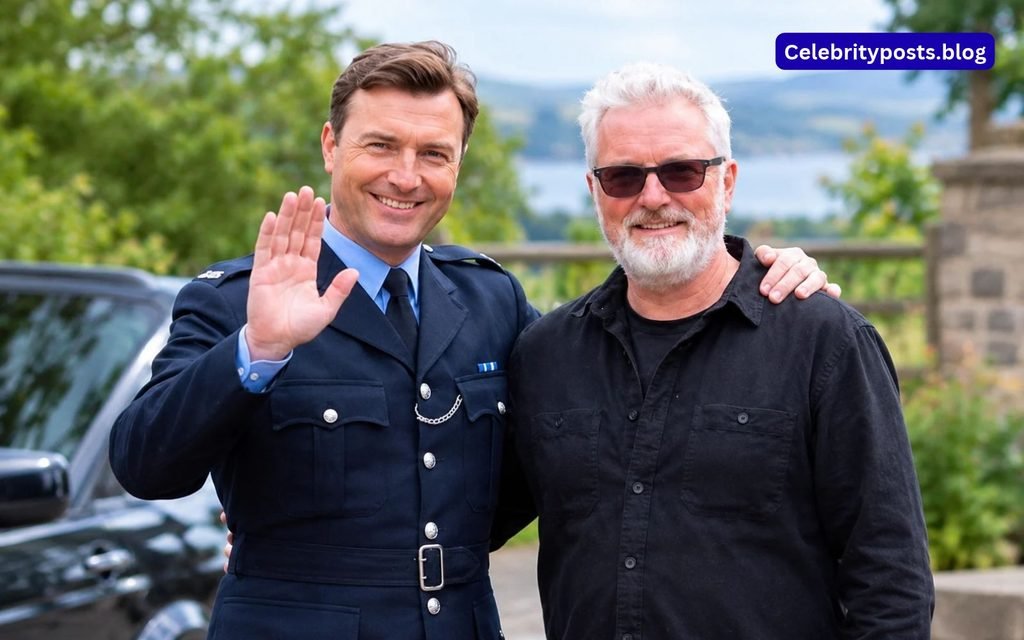
His regular run lasted until 1998. However, Rowan’s story also continued in the special Heartbeat: Changing Places. Network Distributing’s release information identifies a 1999 special in which Nick and his family begin a new life in Alberta, Canada. That distinction explains why accounts of Berry’s departure sometimes refer to different years.
The programme’s continuing appeal is reflected in later releases of his episodes. In 2013, Network collected the first seven series and the Canadian special in Heartbeat: The Rowan Years. The collection preserved a substantial body of work from this phase of his career.
Harbour Lights: A New Coastal Setting
After Heartbeat, Berry starred as harbourmaster Mike Nicholls in Harbour Lights. Broadcast on BBC One in 1999 and 2000, the drama moved his work from Yorkshire’s countryside to the fictional coastal town of Bridehaven.
The production filmed mainly in West Bay, Dorset. Its central character returns to the town where he grew up following a tragic diving accident, taking a job that brings him into contact with local disputes, relationships and business interests. Tina Hobley and Gerard Horan were among Berry’s fellow cast members.
Although the programme again placed him within a community setting, Mike Nicholls had a different occupation and personal history from Nick Rowan. The harbour and coastline also gave the series its own visual character. Its two-series run is a distinct part of Berry’s work between his better-known ITV role and the darker police drama that followed.
In Deep and His Later Television Work
From 2001 to 2003, Berry played undercover detective Liam Ketman in In Deep. Stephen Tompkinson co-starred as Garth O’Hanlon, with the two characters entering criminal environments to investigate serious offences.
The series offered a more threatening view of police work than the village investigations associated with Heartbeat. Maintaining an undercover identity exposed the detectives to danger while complicating their personal lives. Liam’s relationships with his wife and children were part of that dramatic tension.
Created by Peter Jukes, the BBC One production ran for three series and twenty-two episodes. Its stories frequently unfolded across two parts, allowing investigations to develop beyond a single instalment. Lisa Maxwell played Liam’s wife, Pamela.
In Deep became the final sustained television acting role of Berry’s career before his long withdrawal from regular screen work. It also shows why a full account of his acting should extend beyond Wicksy and Nick Rowan: his later credits included a considerably different kind of leading character.
Marriage, Children and Leaving Regular Acting
Berry married Rachel Robertson in 1994. The couple have two sons, Louis and Finley. His family became central to his explanation for stepping back from a career that required extensive time away filming.
In comments from a 2011 interview reproduced in subsequent reporting, he described enjoying being a stay-at-home father. He explained that his sons had been very young while he was working and that he wanted to be present as they grew up. He also said he had not particularly missed acting during his time away.
These remarks provide a clear account of his priorities without requiring speculation about private circumstances. His decision concerned how he wanted to spend his time after years of professional commitments.
He did not frame a possible return as an absolute impossibility. Nevertheless, willingness to consider acting again should not be confused with an announced project. His own explanation focused on satisfaction with family life rather than plans for a comeback.
His Brief EastEnders Return in 2012
On 13 January 2012, Berry returned as Simon Wicks for a short EastEnders appearance connected with the funeral of his screen mother, Pat Evans, played by Pam St Clement.
Sky News reported that the scene appeared after the closing credits. Simon visited Pat’s grave with flowers, providing a farewell from a character who had been absent from the programme for more than twenty years.
The moment was a one-off appearance, rather than a resumption of his former role. Its brevity was part of its significance: it acknowledged Simon’s connection with Pat while allowing Berry to participate without returning to a continuing television schedule.
Nick Berry’s Net Worth
Reliable public information does not establish Nick Berry’s exact net worth. Estimates published by entertainment websites should not be treated as verified statements of his assets, liabilities or present income.
His successful television and recording work is documented, but those achievements do not provide enough information to calculate personal wealth accurately. An exact salary or current financial total would therefore be misleading.
Frequently Asked Questions
How Old Is Nick Berry?
Nick Berry is 63 as of 30 October 2026. He was born on 16 April 1963 in Woodford, Essex, England.
Who Did Nick Berry Play in EastEnders?
He played Simon “Wicksy” Wicks from 1985 to 1990 and returned for a brief scene in January 2012 following the death of Simon’s mother, Pat Evans.
Did Nick Berry Sing the Heartbeat Theme?
Yes. Berry recorded the Buddy Holly song “Heartbeat” as the programme’s theme. His version reached number two on the UK singles chart in 1992.
Who Is Nick Berry’s Wife?
Nick Berry married Rachel Robertson in 1994. They have two sons, Louis and Finley.
Why Did Nick Berry Stop Acting?
Berry explained that he wanted more time at home with his children. After In Deep, he withdrew from regular television acting, although he made the one-off EastEnders appearance in 2012.
Conclusion
Nick Berry’s career connects several recognisable strands of British entertainment: the early years of EastEnders, a major 1986 pop hit, the rural world of Heartbeat and later leading roles in BBC dramas. His move between those projects gave him a screen identity broader than any single character.
His later decision to prioritise raising his sons also belongs in that account. Together, the work and the choices that followed explain his enduring appeal: a performer remembered for familiar characters and successful recordings, who ultimately chose a quieter daily life.












Leave a Reply